
Web IQ: Why Semantic Search Needs Governance, Not Just Better Retrieval
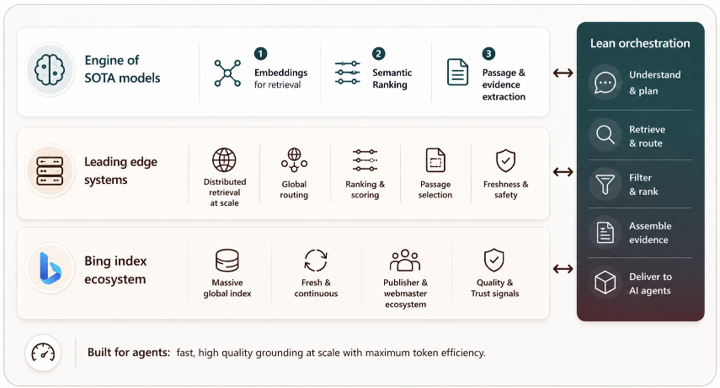
Bing announced Web IQ at Build 2026. The direction fits with Microsoft's broader strategy: make search less about keyword matching and more about task understanding. The premise is that users want answers to questions, not a list of links that contain the keywords they typed.
In consumer search, that shift is welcome. In enterprise, it changes the risk profile. Semantic search is only as good as the retrieval underneath it, and the rules that decide which source counts as authoritative. If those rules are wrong, the answer looks plausible but carries stale data, superseded policy, or confidential context from the wrong repository.
The governance gap
Most semantic search systems treat retrieval as a relevance problem. They rank documents by similarity to the query and surface the best match. That works for public information. It does not work for internal data where access boundaries, document freshness, and classification matter.
Enterprise search needs three controls that semantic layers usually skip. First, scope enforcement: the system should not return documents the user is not allowed to see. Second, freshness awareness: a document from three years ago might still be high-scoring semantically but wrong in practice. Third, source authority: policy documents should outweigh meeting notes when the question is about rules.
Web IQ is positioned as a consumer product first, but the enterprise implications are immediate. Any organisation that adopts semantic search over internal data needs to know how the retrieval layer handles these three controls. Microsoft has not explained that yet.
Source: Bing Blog — Announcing Microsoft Web IQ
Connect with me on LinkedIn.